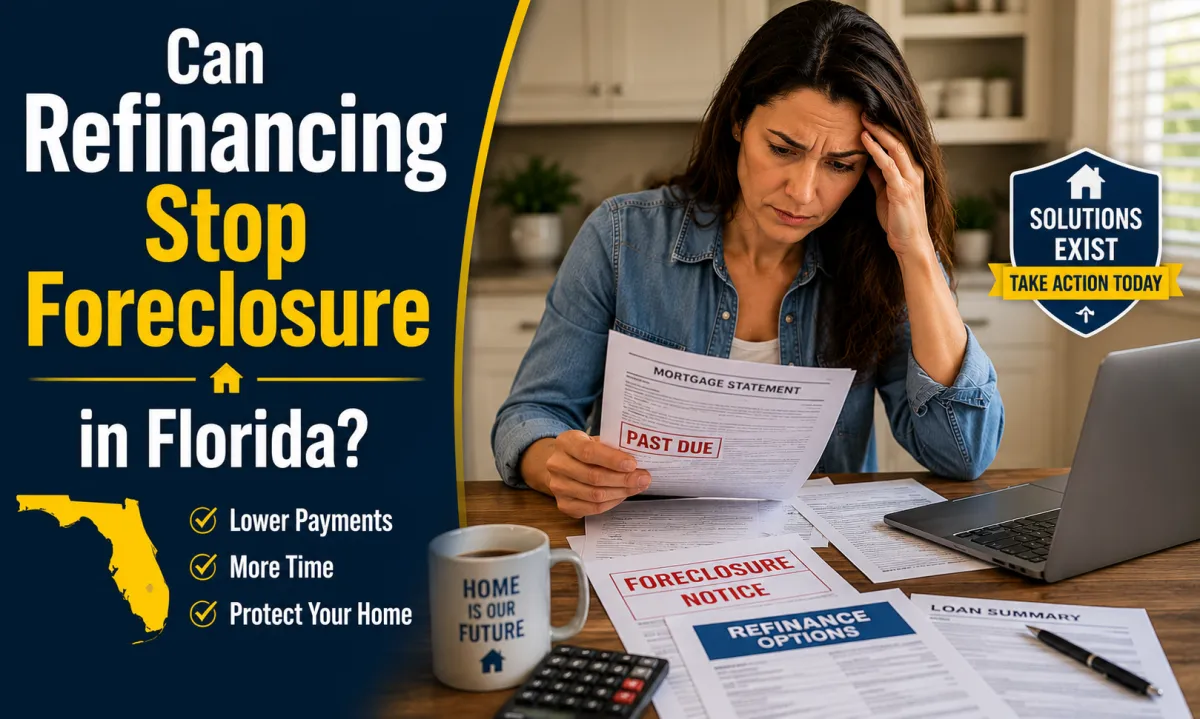
Can Refinancing Stop Foreclosure in Florida Before It’s Too Late?
Can refinancing stop foreclosure in Florida?
In some situations, yes.
But one of the biggest misconceptions homeowners have is believing refinancing automatically becomes impossible once mortgage payments are missed.
That is not always true.
Depending on:
how far behind the homeowner is
available equity
income situation
loan type
property type
credit profile
investor status
there may still be refinance options available before foreclosure progresses too far.
For many Florida homeowners, refinancing is not just about lowering a payment. It may be about:
buying time
restructuring debt
protecting equity
avoiding foreclosure
reducing financial pressure
stabilizing long-term housing costs
The key is understanding how foreclosure timelines work and exploring options before the legal process reaches the final stages.
This guide explains how refinancing may help stop foreclosure in Florida, what loan options sometimes remain available, what challenges homeowners face during the process, and what people should know before making decisions under financial stress.
How Refinancing Can Help Stop Foreclosure
At its core, refinancing replaces an existing mortgage with a new loan structure.
Depending on the situation, refinancing may help homeowners:
catch up missed payments
reduce monthly obligations
extend repayment terms
access equity
consolidate debt
eliminate adjustable-rate pressure
transition into more stable financing
For homeowners facing foreclosure, refinancing is usually about creating breathing room before the situation escalates further.
However, timing matters significantly.
The earlier homeowners begin reviewing options, the more flexibility they often have.
Why Many Homeowners Wait Too Long
One of the biggest problems in foreclosure situations is that many people delay action because they feel overwhelmed or embarrassed.
Some homeowners assume:
“My credit is already ruined.”
“Nobody will approve me now.”
“I probably missed my chance.”
“I’ll just wait and hope things improve.”
Unfortunately, waiting often reduces the number of available solutions.
As foreclosure progresses:
legal costs increase
missed payments accumulate
credit damage worsens
lender flexibility may decrease
refinancing becomes more difficult
That does not mean options disappear immediately, but earlier action usually creates more opportunities.
Understanding Florida’s Foreclosure Timeline
Florida is a judicial foreclosure state.
That means lenders generally must go through the court system before foreclosure is finalized.
This often creates a longer process compared to non-judicial foreclosure states.
That extra time sometimes allows homeowners opportunities to:
refinance
restructure debt
negotiate repayment
sell strategically
access equity
explore alternative financing
If you want a complete breakdown of the foreclosure process itself, read our full guide:
How to Stop Foreclosure in Florida Before Losing Your Home
Can You Refinance After Missing Mortgage Payments?
Sometimes.
The answer depends on several factors.
Equity Matters
One of the biggest factors lenders evaluate is available equity.
Homeowners with substantial equity may still have more refinance possibilities available compared to borrowers who owe close to the home’s full value.
Equity can sometimes help:
offset risk
improve lender flexibility
create cash-out opportunities
support restructuring strategies
Timing Matters
There is a major difference between:
being 30 days late
being 90 days late
already having a foreclosure sale scheduled
The earlier homeowners begin reviewing refinance options, the better.
Many people wait until legal notices arrive before taking action.
At that point, timelines become more urgent.
Income Matters
Lenders still need to verify repayment ability.
However, some non-traditional loan programs evaluate income differently than conventional mortgages.
This may help:
self-employed borrowers
investors
business owners
retirees
borrowers with non-W2 income
Types of Refinance Solutions That May Help
Every situation is different.
Below are some refinance strategies homeowners sometimes explore before foreclosure progresses further.
Traditional Rate-and-Term Refinance
A traditional refinance replaces the current mortgage with a new loan.
The goal is often:
lower monthly payments
lower interest rates
improved affordability
longer repayment timelines
This option usually works best before delinquency becomes severe.
Best For:
homeowners with stable income
borrowers with decent credit
people seeking payment reduction
Cash-Out Refinance
A cash-out refinance allows homeowners to access equity while replacing the current mortgage.
In some cases, this may help homeowners:
pay off arrears
eliminate high-interest debt
stabilize finances
avoid additional financial pressure
However, using equity strategically matters.
Borrowers should avoid creating long-term financial strain without a realistic repayment plan.
Best For:
homeowners with strong equity
borrowers managing multiple debts
homeowners seeking financial restructuring
Non-QM Loan Solutions
Non-QM loans are designed for borrowers who may not fit traditional conventional lending guidelines.
These programs sometimes help:
self-employed borrowers
business owners
investors
borrowers with alternative income documentation
In foreclosure situations, flexibility matters.
Some homeowners who cannot qualify conventionally may still explore non-QM financing depending on the situation.
DSCR Loans for Investors
Florida investors have faced increasing pressure from:
rising insurance costs
vacancies
property taxes
adjustable rates
slowing rental cash flow
For rental property owners, DSCR loans may sometimes help refinance investment properties based primarily on cash flow rather than personal income documentation.
This can be especially important for:
Airbnb investors
portfolio landlords
self-employed investors
LLC-owned properties
Reverse Mortgage Refinancing Solutions
For some Florida homeowners age 62 and older, reverse mortgages may help eliminate required monthly mortgage payments if enough equity exists.
This is one of the most misunderstood foreclosure prevention strategies available.
A reverse mortgage may allow qualifying seniors to:
pay off an existing mortgage
reduce monthly financial pressure
remain in the home
use equity strategically during retirement
This solution is not right for everyone, but for some retirees struggling with rising expenses or reduced fixed income, it may create stability during difficult financial periods.
Common Reasons Refinancing Gets Denied
Understanding potential obstacles matters because it helps homeowners avoid surprises.
Severe Delinquency
The further foreclosure progresses, the harder refinancing may become.
Some lenders will not approve loans once foreclosure reaches advanced legal stages.
Insufficient Equity
Low equity limits available options significantly.
This becomes more difficult if:
property values decline
large balances remain
secondary liens exist
Income Instability
Even flexible loan programs generally require evidence that the borrower can support the new loan structure.
Unrealistic Financial Expectations
Sometimes homeowners try solving long-term affordability problems with short-term temporary fixes.
A refinance should improve long-term stability, not simply delay financial hardship briefly.
Signs Homeowners Should Review Refinance Options Early
Many people wait too long because they hope the problem resolves itself.
It may be wise to review options early if:
mortgage payments are becoming difficult consistently
credit cards are being used for bills
savings are disappearing rapidly
adjustable-rate payments increased
property taxes or insurance rose significantly
rental properties stopped cash flowing
income changed substantially
Early action often creates more flexibility.
Refinancing vs Selling Before Foreclosure
Refinancing is not always the best solution.
Sometimes selling before foreclosure becomes final may protect:
remaining equity
credit profile
financial flexibility
The right decision depends on:
long-term affordability
equity position
future income
retirement plans
property goals
For some homeowners, keeping the property makes sense.
For others, selling strategically may reduce long-term financial damage.
What Homeowners Should Avoid During Foreclosure
Ignoring Notices
Avoiding lender communication usually creates more stress later.
Even difficult conversations may provide insight into available options.
Falling for “Guaranteed Approval” Promises
No legitimate lender can guarantee approval without reviewing the full financial situation.
Homeowners facing foreclosure are often targeted by scams promising unrealistic solutions.
The Consumer Financial Protection Bureau provides resources homeowners can use to understand foreclosure prevention and avoid misleading offers.
Draining Retirement Accounts Too Quickly
Many homeowners empty savings or retirement accounts trying to temporarily stay current without addressing the larger issue.
Before liquidating long-term assets, it may help to review all available options carefully.
Frequently Asked Questions
Can refinancing stop foreclosure immediately?
Not necessarily. However, refinancing may sometimes help resolve delinquency before foreclosure is finalized depending on timing and qualification.
Is refinancing possible after receiving foreclosure notices?
Sometimes. The earlier homeowners explore options, the better.
Can self-employed borrowers refinance during foreclosure risk?
Potentially. Certain non-QM loan programs may offer flexibility for borrowers with alternative income documentation.
Can investors refinance distressed rental properties?
In some cases, DSCR or investor-focused financing may still help depending on cash flow and property performance.
Can seniors use reverse mortgages to stop foreclosure?
Qualifying homeowners age 62 and older with enough equity may sometimes use reverse mortgage solutions to eliminate existing mortgage obligations.
Does refinancing hurt credit?
Applying for financing may involve credit inquiries, but foreclosure itself generally has a much larger long-term credit impact.
Should I refinance or sell my home?
That depends on affordability, equity, income stability, long-term goals, and overall financial situation.
Final Thoughts
Foreclosure situations are stressful, especially when homeowners feel like time is running out.
But many Florida homeowners still have options available depending on:
timing
equity
income
property type
loan structure
For some people, refinancing may help stabilize payments and avoid foreclosure progression.
Others may explore:
reverse mortgage solutions
DSCR investor refinancing
loan restructuring
strategic selling
repayment options
The most important thing is reviewing solutions before foreclosure reaches the final stages.
Waiting too long often reduces flexibility.
If you are already behind on payments, you may also want to read our related guide explaining what happens after missing 3 mortgage payments in Florida and how foreclosure timelines typically progress.
If you want to explore possible refinance, foreclosure relief, reverse mortgage, or investor loan solutions, see what you qualify for here
𝗞𝗲𝗹𝗹𝘆 𝗡𝗮𝗱𝗲𝗮𝘂 𝗡𝗠𝗟𝗦# 𝟭𝟬𝟮𝟳𝟲𝟭𝟴 | 𝗥𝗮𝘆 𝗡𝗮𝗱𝗲𝗮𝘂 𝗡𝗠𝗟𝗦# 𝟭𝟬𝟮𝟳𝟲𝟭𝟳
Loan Officers | Licensed in Florida
Equity Smart Home Loans
Visit Smart-N-Loans.com
Equity Smart Home Loans NMLS# 856170 | DRE# 01906808
1499 Huntington Dr, Suite 500, South Pasadena, CA 91030
Equal Housing Lender
Rates, fees, and programs are subject to change without notice. This is not a guarantee or a commitment to lend. Some products may not be available in all states. Not all applicants qualify for financing; subject to review of credit and collateral.